Speyside
A river valley in the north-east that holds around half of Scotland's malt distilleries, most of its famous names, and a regional identity that is, legally speaking, optional.
Under the Scotch Whisky Regulations 2009, Speyside is a locality inside the Highland region. A Speyside distillery may therefore call itself Highland, and several do, presumably to avoid being confused with the neighbours.
Why the fruit won
Speyside's reputation for orchard fruit, honey and gentle malt is not a gift of the landscape so much as a series of decisions made after 1823. The Excise Act of that year made a licence affordable, and George Smith at Glenlivet took one in 1824, to the lasting irritation of his unlicensed neighbours. The glens of the Spey, Fiddich, Livet and Lossie had good barley from the Laich of Moray, soft water and, crucially, a remoteness that had suited illicit distilling for a century.
When the railway reached the valley in the 1860s, coal became a practical kiln fuel, so the peat smoke that had once been unavoidable became a matter of taste — and the blenders, who by then bought most of the output, found they had little taste for it. Glenfiddich, Balvenie, Glen Grant, Cragganmore and dozens more were built or expanded to supply blends with a soft, sweet malt that would take a sherry cask well. The "Speyside style" is therefore less a terroir than a commercial brief, followed with unusual diligence. Dufftown, Rothes, Keith and Elgin became the clusters, each with more stillhouses than pubs.
Copper, fire and the shape of things
For a region with a shared reputation, the stillhouses disagree impressively. Macallan runs small, squat spirit stills that give a rich, oily new make. Glenfarclas still fires its stills directly with gas rather than through steam coils, and will tell you the scorching contributes weight. Glen Grant fits purifiers to its tall stills so that heavier vapour falls back for redistillation, producing one of the lightest spirits in the valley.
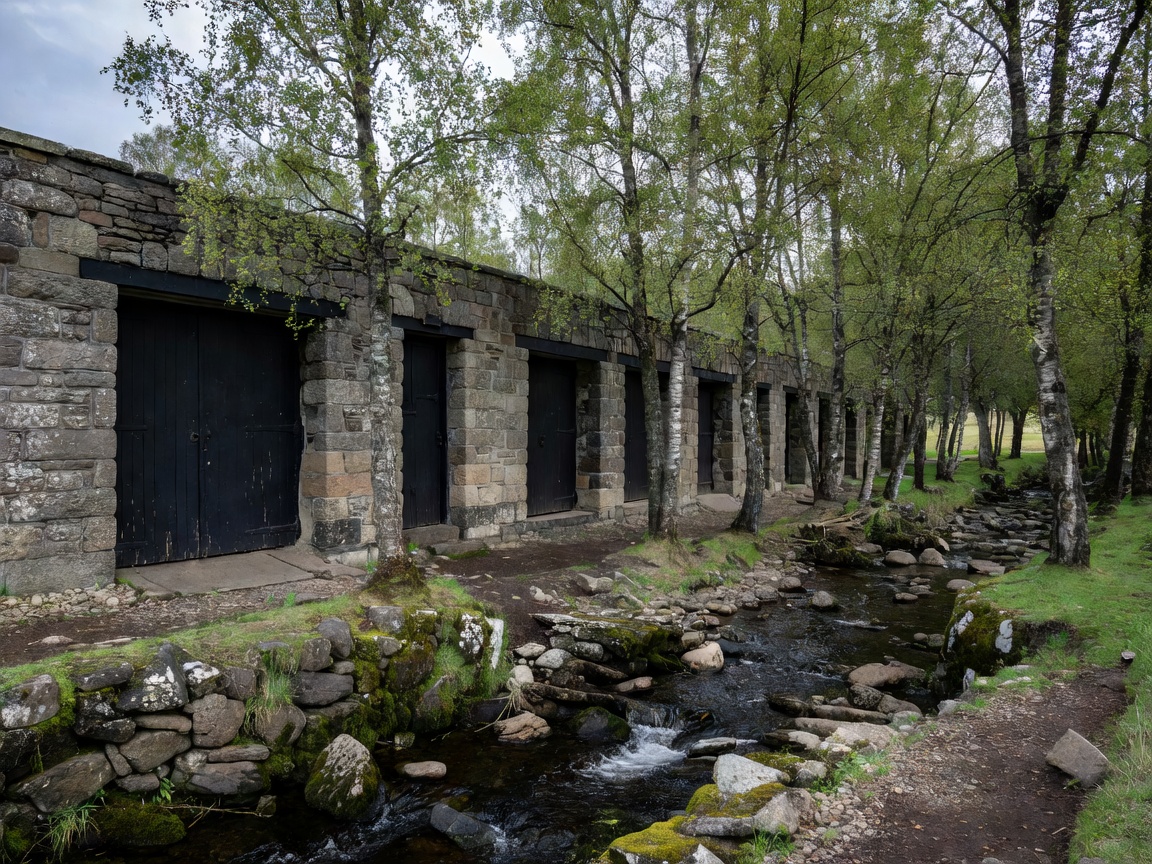
Mortlach in Dufftown runs six mismatched stills in a partial triple distillation the distillery quantifies as 2.81 times, then condenses in worm tubs — long copper coils in cold water outside the stillhouse, which give less copper contact and a meatier, faintly sulphury character that ages into something magnificent. Cragganmore also uses worm tubs, along with flat-topped stills. Balvenie keeps a working floor maltings for part of its requirement and its own cooperage. Fermentation length matters as much as still shape: longer ferments push towards fruity esters, short ones towards cereal. None of this is visible from the road, which is why the outsides all look alike.
Oak, oloroso and the Craigellachie yard
Speyside is where the sherry cask went to be adored. Glenfarclas and Macallan built their names on European oak seasoned with oloroso; Aberlour's A'bunadh is bottled at cask strength from oloroso-seasoned casks; GlenAllachie and Benriach lean the same way. Glenfiddich and The Glenlivet build their core ranges largely on American oak from the bourbon trade, with sherry wood as seasoning rather than the main event.
Since Spanish rules ended the bulk shipment of sherry in cask during the 1980s, a "sherry cask" is now overwhelmingly a cask seasoned with sherry specifically for the whisky industry — perfectly honest, slightly less romantic. The Speyside Cooperage at Craigellachie repairs and rebuilds casks for distilleries across Scotland and lets visitors watch from a gallery. Maturation happens in dunnage warehouses (earth floors, casks three high) or racked ones (concrete, many high); the inland climate is cool and steady, which suits the long ageing the region is known for.
What the label lets you know
A Speyside distillery may legally label itself Speyside or Highland, since the 2009 Regulations place the former inside the latter; some do both on different bottlings. The "Glenlivet" suffix that a dozen distilleries once hyphenated onto their names was curtailed by an 1884 agreement reserving the definite article for The Glenlivet alone — hence "The".
Look for "matured in" versus "finished in": the first describes the whole life, the second a late holiday. "Sherry oak" says nothing about how long, or how many previous fills. "Natural colour" and "non chill-filtered" are voluntary claims worth noticing because their absence often means the opposite. The age statement is the youngest component, not an average, and a vintage is a distillation year, not a bottling one.
Six stillhouses, six answers
| Distillery | Where | In the stillhouse | Cask leaning |
|---|---|---|---|
| Glenfarclas | Ballindalloch | Direct-fired stills | Oloroso-seasoned European oak |
| Macallan | Craigellachie | Small spirit stills | Sherry-seasoned oak, both European and American |
| Glenfiddich | Dufftown | Large site, many small stills | Mainly bourbon wood, sherry as seasoning |
| Mortlach | Dufftown | Partial triple distillation, worm tubs | Sherry wood suits the meaty spirit |
| Glen Grant | Rothes | Tall stills with purifiers | Bourbon wood, light style |
| Cragganmore | Ballindalloch | Flat-topped stills, worm tubs | Refill and bourbon wood |
If you want one line: Speyside is the region most likely to be gentle, and most likely to surprise you when it is not.