The Lowlands
Where a tax line taught distillers to be quick, the grain distilleries learned to be enormous, and a friar left the oldest paperwork in the business.
Light, grassy and long underrated, the Lowlands are the region people skip on the way to somewhere smokier. That is their loss and, for the moment, your bargain.
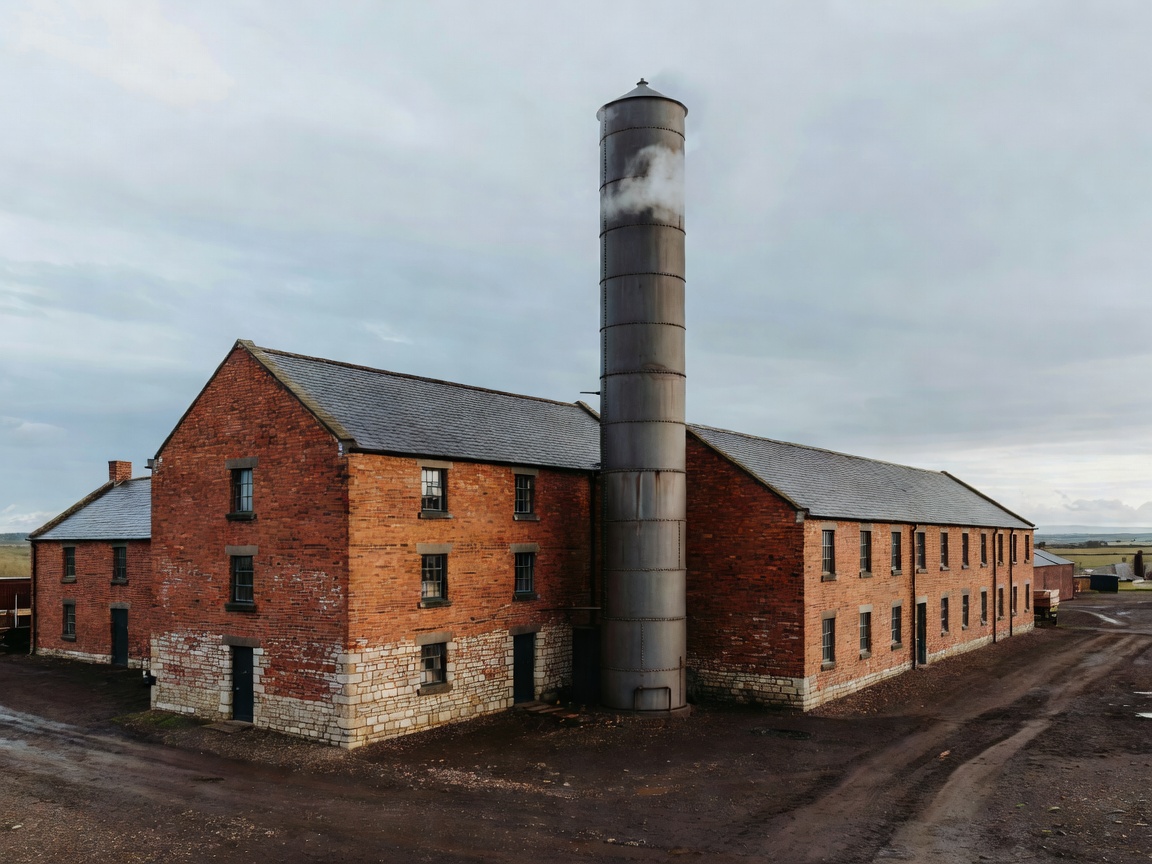
A friar, some malt and a tax
The Exchequer Rolls of Scotland for 1494 record eight bolls of malt sent to Friar John Cor "to make aqua vitae", which is why Lindores Abbey in Fife is called the spiritual home of Scotch and why a distillery now stands beside its ruins. The region's commercial character was set later, by the Wash Act of 1784. Taxed on still capacity rather than output, Lowland distillers ran shallow stills fast and often, making large volumes of light and sometimes rough spirit, much of it shipped to London for rectifying into gin.
That inheritance of volume and lightness still shapes the region. It is home to the great grain distilleries, to malts that would rather charm than shout, and to a cluster of new farm and city distilleries that have refilled a map which was nearly empty a generation ago.
Malt distilleries: few, then more
For a long stretch of the late twentieth century the Lowland malt count could be done on one hand. Auchentoshan near Glasgow, Glenkinchie outside Edinburgh and Bladnoch at Wigtown, the southernmost distillery in Scotland, carried the flag. Rosebank in Falkirk closed in 1993, Littlemill and St Magdalene earlier, and their bottles became relics with prices to match.
The region has since refilled. Daftmill is a Fife farm distillery that distils only between the farm's own harvests; Kingsbarns and Lindores Abbey joined it in Fife; Annandale reopened near Dumfries; Rosebank has been rebuilt; and city distilleries in Glasgow and Edinburgh — Clydeside, Glasgow Distillery, Holyrood — brought stills back inside the two largest cities. The Lowland description is now attached to more distinct spirits than at any time in living memory, which makes "the Lowland style" a phrase to use carefully.
Triple distillation and the column
Auchentoshan triple-distils every drop, running an intermediate still between wash still and spirit still to reach a higher-strength, lighter, grassier spirit; Rosebank did the same historically and the rebuilt distillery has said it will. Elsewhere, Lowland lightness comes from fast distillation and clear worts rather than a third pass. Either way the aim is the same: less weight, more delicacy, and nothing for a bad cask to hide behind.
The region's biggest stills are not pots. Cameronbridge in Fife, Girvan in Ayrshire, Strathclyde in Glasgow, North British in Edinburgh and Starlaw in West Lothian run column stills on wheat or maize, producing grain whisky continuously at strengths just under the legal ceiling of 94.8% ABV. Aeneas Coffey patented the design in 1830 and the blended Scotch industry was built on it. Cameronbridge also bottles its own single grain as Cameron Brig, one of the few grain whiskies sold under a distillery name rather than disappearing into a blend.
Maturation with nowhere to hide
A light spirit shows its wood. Lowland malts usually mature in refill and first-fill American oak from bourbon, where tired casks produce thin whisky and good ones produce cream, vanilla and cut grass. Grain whisky for blending spends its years in vast racked warehouses, often in refill casks, because its job is to be a smooth canvas; the same grain given a good first-fill cask for two decades is a different, honeyed animal, which independent bottlers noticed some time ago.
Wine finishes are common among the newer distilleries because they add colour and character quickly, and a young distillery needs both. Glengoyne's Lowland warehouses across the road from its Highland stills are a reminder that the maturation region and the distillation region need not match: the label follows the stillhouse.
Reading the categories
Because the Lowlands produce both malt and grain, this is the region where the five legal categories in the Scotch Whisky Regulations 2009 matter most on a label. "Single" means one distillery, not one grain. "Triple distilled" and "Lowland" are the claims worth checking; the first is voluntary, the second protected.
| Category | What it must be | Lowland examples |
|---|---|---|
| Single Malt Scotch Whisky | Malted barley only, batch distilled in pot stills, at one distillery | Auchentoshan, Glenkinchie, Bladnoch, Daftmill |
| Single Grain Scotch Whisky | One distillery; malted barley with other whole grains, usually column distilled | Cameron Brig from Cameronbridge; Girvan |
| Blended Malt Scotch Whisky | Single malts from more than one distillery | Bottlers' regional blends |
| Blended Grain Scotch Whisky | Single grains from more than one distillery | Rare on shelves, common in blenders' stock |
| Blended Scotch Whisky | One or more single malts with one or more single grains | Most of what the region's grain goes into |