The Highlands
The largest region on the map and the least informative word on a label. Everything north of a line drawn for tax purposes in 1784, minus two exceptions and plus most of the islands.
If you were hoping for a house style, the Highlands would like to direct you to Speyside, which it technically contains.
A line drawn by the Exchequer
The Highland Line was not drawn by geologists. The Wash Act of 1784 split Scotland for excise purposes along a line running roughly from Greenock on the Clyde to Dundee on the Tay, taxing Lowland distillers on still capacity and Highland ones on a gentler scale, in return for small stills and no export south of the line. The Scotch Whisky Regulations 2009 kept the division, carving Speyside and Campbeltown out as separate localities and leaving the rest — including every island except Islay — as Highland.
So Talisker on Skye, Highland Park on Orkney, Jura, Tobermory on Mull and Arran are all Highland whiskies in law, however often "Island" appears on a shop shelf. The region runs from the Pentland Firth to the Clyde estuary, and it would be strange if it had a single style. It does not, and the honest ones admit it.
Four compass points and a lot of water
The north coast and the firths give the nearest thing to a shared character. Glenmorangie's tall, slender stills — among the tallest in Scotland, a fact the distillery does not under-publicise — make a light, floral spirit. Dalmore favours rich sherry wood. Clynelish is famous for a waxy texture attributed to residue left in its feints receivers, which the distillery deliberately leaves alone. Old Pulteney in Wick leans salty and is proud of it.
The east has GlenDronach's oloroso-soaked malts, Glen Garioch's robust spirit and Ardmore, long the peated Highland malt behind the Teacher's blend. Perthshire holds Aberfeldy, Blair Athol and Edradour, one of the smallest, while Dalwhinnie sits high, cold and cooled in worm tubs. The west has Oban and Ben Nevis. The islands add Talisker's pepper, Highland Park's heather peat, Ledaig's smoke from Tobermory and Arran's orchard fruit. Naming a Highland character is like naming the weather: possible for a given afternoon, unwise as a rule.
What the stills are doing
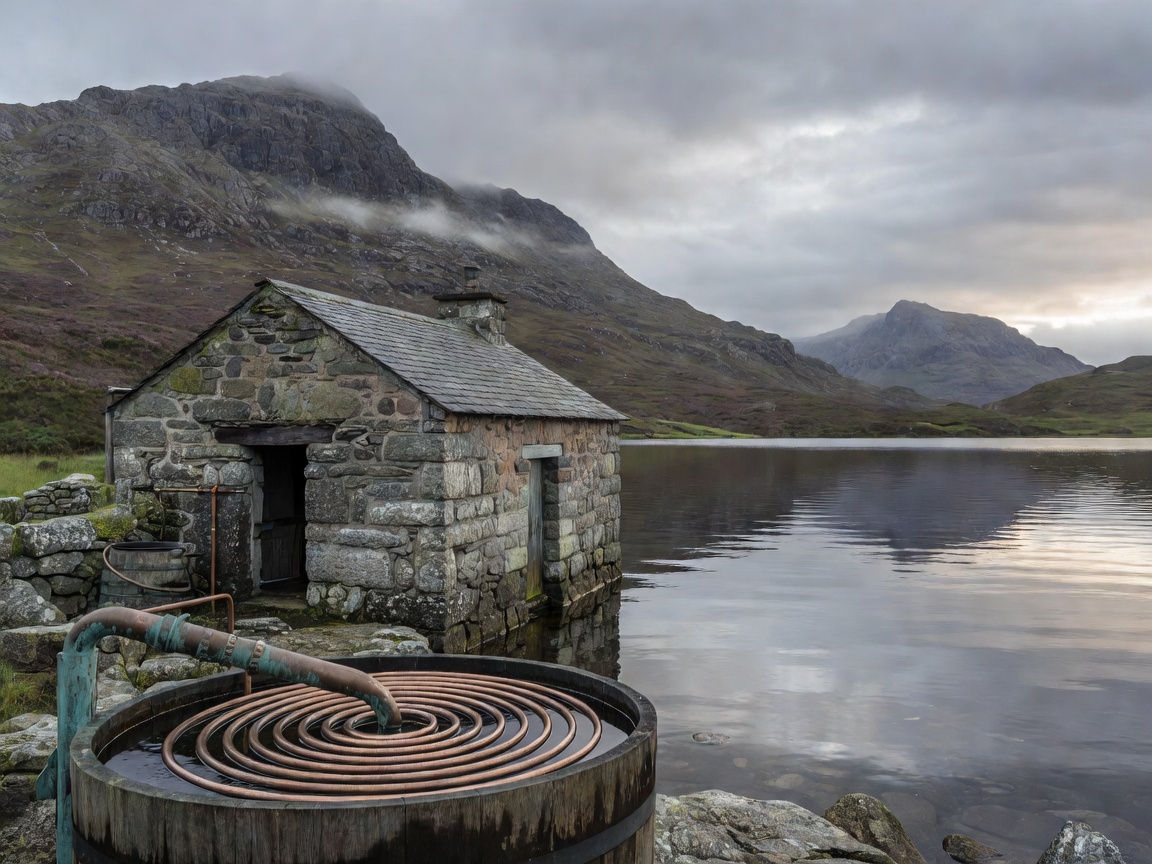
Because the region cannot rely on a shared story, it is the best place to watch equipment shape spirit. Tall stills and upward-angled lyne arms increase reflux, sending heavier vapour back to be redistilled and producing lighter spirit; short stills and downward arms do the reverse. Worm tubs — at Dalwhinnie, Talisker and Oban — give less copper contact than modern shell-and-tube condensers, leaving more sulphury, meaty compounds that age into richness.
Loch Lomond runs straight-necked stills fitted with rectifying plates alongside conventional swan-necked stills and column stills, so it can make several styles under one roof. Glengoyne distils unusually slowly and uses no peat at all. Deanston bottles its core range at 46.3% without chill filtration, which is a policy rather than a still, but tells you something about the spirit's confidence.
Cask policy without a regional rule
Highland cask policy is whatever each owner decides. GlenDronach and Dalmore stake everything on sherry-seasoned European oak; Dalmore has a long-standing arrangement with González Byass for Matusalem oloroso casks. Glenmorangie built its reputation on wood management, commissioning American oak from specific forests and air-drying it before it ever holds bourbon. Glengoyne, sitting on the Highland Line itself, distils in the Highlands and matures across the road in the Lowlands, which is the sort of thing the Regulations permit and the label ignores.
Cooler northern warehouses mean slower maturation; Orkney's are colder still. What the region shares is time, not wood, and a certain willingness to let the customer sort it out.
Label notes and a map of sorts
"Highland" on a single malt narrows the field to well over half of Scotland's landmass, so read the distillery name, not the region. Speyside distilleries may lawfully call themselves Highland. Island distilleries may put "Isle of Skye" or "Orkney" above the legal description, which is informative; "Island" alone is not a category. Blends with "Highland" in the brand name are making a marketing point rather than a geographical one.
| Area | Distilleries | What tends to turn up |
|---|---|---|
| North and the firths | Glenmorangie, Dalmore, Clynelish, Old Pulteney, Balblair | Floral to waxy, salt on the coast, sherry at Dalmore |
| East | GlenDronach, Glen Garioch, Ardmore, Fettercairn | Sherry weight, robust malt, peat at Ardmore |
| Central and Perthshire | Aberfeldy, Blair Athol, Edradour, Dalwhinnie, Glenturret | Honeyed, heathery, worm-tub weight at Dalwhinnie |
| West and south | Oban, Ben Nevis, Glengoyne, Deanston, Loch Lomond | Maritime at Oban, unpeated fruit at Glengoyne, variety at Loch Lomond |
| Islands (Highland in law) | Talisker, Highland Park, Jura, Tobermory, Arran | Pepper, heather smoke, coastal air, orchard fruit |