Islay
The smallest region by land, the loudest by reputation, and the only one where the fuel became the flavour and the flavour became the brand.
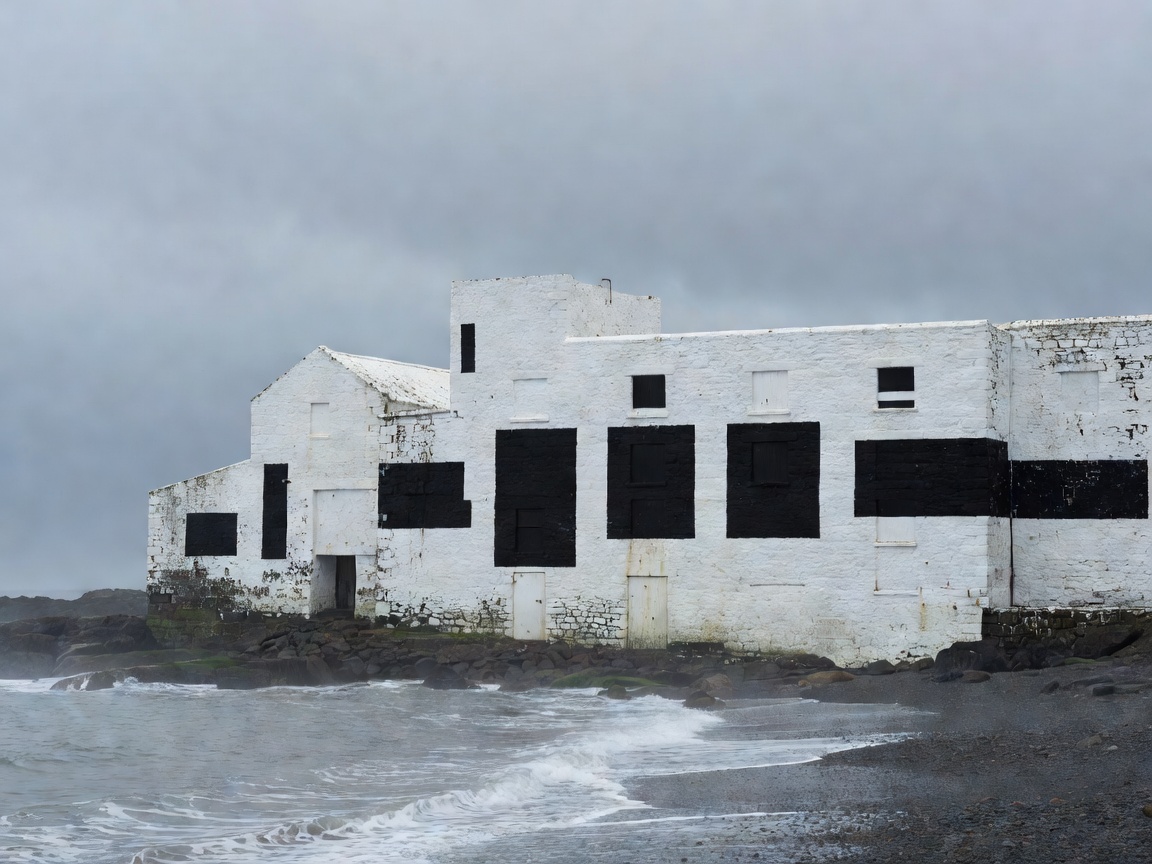
Most of the distilleries sit at the water's edge, painted white with their names in black capitals large enough to be read from a boat, which was the point.
Peat as an accident that stayed
Nobody set out to make smoky whisky on Islay. The island had abundant peat, no coal, few trees and malt that needed drying, so barley was kilned over smouldering turf and absorbed the phenols. By the time coal was a practical option the customers had acquired the taste, and a handful of Victorian distillers decided the taste was the point.
The southern Kildalton coast — Ardbeg, Lagavulin and Laphroaig, three white-walled neighbours within a short walk of one another — became the reference for heavy peat. Bowmore, on Loch Indaal and licensed in 1779, is the island's oldest surviving distillery. Bruichladdich and Kilchoman sit on the Rinns to the west; Caol Ila and Bunnahabhain face the Paps of Jura across the Sound of Islay, with Ardnahoe on the same stretch. Most take malt from the Port Ellen maltings, which supplies the island to each distiller's own peat specification, though Bowmore, Laphroaig and Kilchoman keep floor maltings for a share of their needs.
Phenols, parts per million and what survives
Peat level is measured as phenol content in parts per million in the malted barley, not in the whisky, which is why the figures sound alarming. Ardbeg quotes a malt specification in the mid-fifties, Laphroaig around forty and Lagavulin in the mid-thirties; Bruichladdich's Octomore series prints specifications well into the hundreds on the label, and would like you to notice. Most of that phenol is lost — in milling, mashing, fermentation and above all in the still, where the cut points decide how much of the heavy, tarry end of the run makes it into the spirit.
Bunnahabhain's core range is largely unpeated; so is Bruichladdich's under its own name, with Port Charlotte as its heavily peated line. Caol Ila, the island's largest, makes a lighter, grassier smoke, much of which goes into Johnnie Walker. Still shape does the rest. Ardbeg fits a purifier to its spirit still, increasing reflux and lifting a sweet note over the smoke; Lagavulin distils slowly through pear-shaped stills; Laphroaig's stills are small. Kilchoman, a farm distillery founded in 2005, grows part of its barley on site and malts it there.
Salt air and the warehouse question
Maturation on Islay is mostly in American oak from the bourbon trade, which lets the smoke speak, with sherry wood used for weight — Lagavulin 16 and much of Bowmore's range carry it. Laphroaig's Quarter Cask uses smaller casks for more wood contact in less time. Whether shoreline warehouses genuinely put salt in the glass is argued about at length; what is not argued is that peat mellows with age, so a very old Islay is a gentler creature than its young sibling and priced accordingly.
A good deal of island spirit matures on the mainland in any case, and the label need not say so. Cask strength and no-age-statement releases are common here — Ardbeg's Uigeadail and Corryvreckan carry no age at all — because peat can carry a young spirit convincingly, and a young spirit carries a business.
Reading an Islay label
"Islay Single Malt Scotch Whisky" is a protected regional description. "Peated" has no legal definition and "heavily peated" even less, so a malt specification in ppm is the only useful number, and it describes the barley. Independent bottlers who may not use a distillery's name write "a Kildalton distillery" or use a trade name such as Williamson for Laphroaig; a "blended malt" that tastes exactly like one Islay is usually a single malt with a teaspoon of something else added so the name cannot be used.
Port Ellen on a label denotes a distillery closed in 1983 and later rebuilt, and its older stock is priced as the relic it is. Fèis Ìle, the island's festival held each late spring, produces limited bottlings more collected than drunk. Neither fact makes the whisky taste different.
Eight stillhouses along one coast road
| Distillery | Coast | Peat approach | In the stillhouse |
|---|---|---|---|
| Ardbeg | Kildalton | Heavy | Purifier on the spirit still |
| Lagavulin | Kildalton | Heavy | Slow distillation, pear-shaped stills |
| Laphroaig | Kildalton | Heavy | Small stills, partial floor malting |
| Bowmore | Loch Indaal | Medium | Partial floor malting, sherry wood in the range |
| Bruichladdich | Rinns | Unpeated core; Port Charlotte and Octomore peated | Tall Victorian stills |
| Kilchoman | Rinns | Medium to heavy | Farm distillery, some barley grown on site |
| Caol Ila | Sound of Islay | Medium | Largest on the island, feeds blends |
| Bunnahabhain | Sound of Islay | Mostly unpeated | Large stills, gentle spirit |
In short: Islay is one flavour with eight opinions about it, and one of the opinions is that the flavour is optional.